

.svg)
Common Solar Installation Mistakes Homeowners Should Avoid
Most people don’t come to solar looking for complexity. Power bills are rising, the grid feels less reliable, and putting panels on the roof seems like a smart move. That instinct is usually right. People are seeking a simple but effective solution. However, where things go wrong is not the solar itself, but the decisions made before the first panel goes up. Through careful planning and considered design, you can avoid common mistakes and enjoy a functional and effective solar setup.
From working with households across New Zealand through Harrisons Solar, one thing pops up consistently. The biggest solar installation mistakes are rarely obvious at the start. They tend to surface later, once the system has been running for a few seasons and everyday habits settle back in. Your solar set-up is key, with longevity being central to the success and functionality of your panels.
If you want to avoid solar mistakes, these are the areas worthy of thoughtful consideration before you commit.
Guessing How Much Power Your Home Actually Uses
Energy use in most homes has changed more than people expect. A home that once sat empty during the day may now have someone working from home. Working from home is popular, and in turn, appliances are more readily used, with homes being well-lived in during the day. Also, kids get older, routines shift, and new appliances quietly add more demand, including heat pumps or EV chargers. These devices are often season-specific but can also differ from household to household.
When systems are sized without digging into this properly, two common issues appear:
- Sizing only for today’s usage
Using last year’s power bills as the main guide ignores how households evolve. Over time, the system can struggle to keep up with demand increases. Think about your personal usage and consider your ever-growing home. Usage naturally fluctuates over time; it is best to forecast where you will be in the future, so that you are covered either way. - Oversizing without a clear plan
Some homes install larger systems expecting strong exports, only to find that buy-back rates are limited and savings don’t match expectations.
Both are common solar installation mistakes caused by looking at the present in isolation. Solar stays on the roof for decades, so thinking beyond the next year usually leads to a system that feels more predictable long term. Have a clear plan and, when in doubt, consider potential future scenarios for your home. To ensure your solar power and its functionality for the decade ahead, plan and give yourself room to adjust.
Overlooking How the Roof Really Performs
A roof that “gets sun” is only the starting point. Sun angles change throughout the day and across seasons. Trees grow, and neighbouring buildings cast long shadows, especially in winter.
A roof that looks ideal at midday can behave very differently in the morning or late afternoon. Understanding how a roof performs over time helps avoid systems that only work well under perfect conditions. This matters most in established suburbs where shade is part of the landscape. No matter the neighborhood in which you live, you want to be sure that your solar setup can perform. With most Kiwi homes receiving around 2,000 hours of sun annually, there should be ample exposure for charging. But placement does matter, so if you live on a shade-heavy street in Auckland, it’s best to assess before you lock in placement. Avoid solar mistakes by considering your roof’s location.
Letting Price Do All the Talking
Price is always part of the decision, and solar has become easier to compare. The risk is focusing on cost alone while overlooking what sits underneath.
Issues usually show up later:
- Lower-cost components age differently
Cheaper panels or inverters can work fine early on, but differences in build quality and efficiency often become noticeable after years of sun, wind, and rain. Kiwis know that all these elements in New Zealand always keep us on our toes at the best of times. So choosing a durable and robust solution is absolutely recommended to keep solar panels effective. - Slower support when things go wrong
Delays in replacements or limited warranty backing can quickly outweigh upfront savings.
This type of solar installation mistake doesn’t announce itself early. It only becomes frustrating when support or replacements are needed.
Treating Installation Like a Final Step
Solar installation involves more than mounting panels. Wiring, waterproofing, spacing, and system setup all affect performance over time. Remember, solar power installation is a detailed process, but when done effectively, it will transform your everyday experience.
But of course, shortcuts don’t usually cause immediate failure. They create slow problems, such as water ingress, exposed cabling, or unexplained drops in output. Working with installers who understand New Zealand conditions helps reduce these risks and makes fixing easier if issues arise later.
Forgetting About Maintenance and Monitoring
Solar is low maintenance, not minimal maintenance. Remember that panels collect dust, pollen, and bird droppings, especially in coastal or tree-heavy areas. Over time, this reduces output without obvious warning signs.
Monitoring tools help, but only if they’re checked occasionally. Inverters and batteries also age differently to panels. Knowing what normal performance looks like makes it easier to spot changes early, when fixes are simpler.
Missing the Smaller Details
Some households only think about batteries or EV charging after the system has been running for a while. By then, switchboard capacity or system design may limit upgrades, unnecessarily increasing costs.
Approvals and grid connections can also slow things down if handled late. These details aren’t exciting, but they often shape how smooth the overall experience feels once the panels are installed.
What Homeowners Have Said After Installation
“I did my research about panels and battery options, then got quotes from five service providers. We picked Harrisons Solar for being clear on the solution and installation. Harry explained what to expect, the install took less than two days, and we started saving straight away.”
— Rudolf Arada, Google Review
“We nearly went with a competitor but changed our minds before signing. Harrisons Solar were excellent from start to finish and delivered beyond expectations.”
— Richard Levitt, Google Review
When Solar Is Done Right, It Just Fits
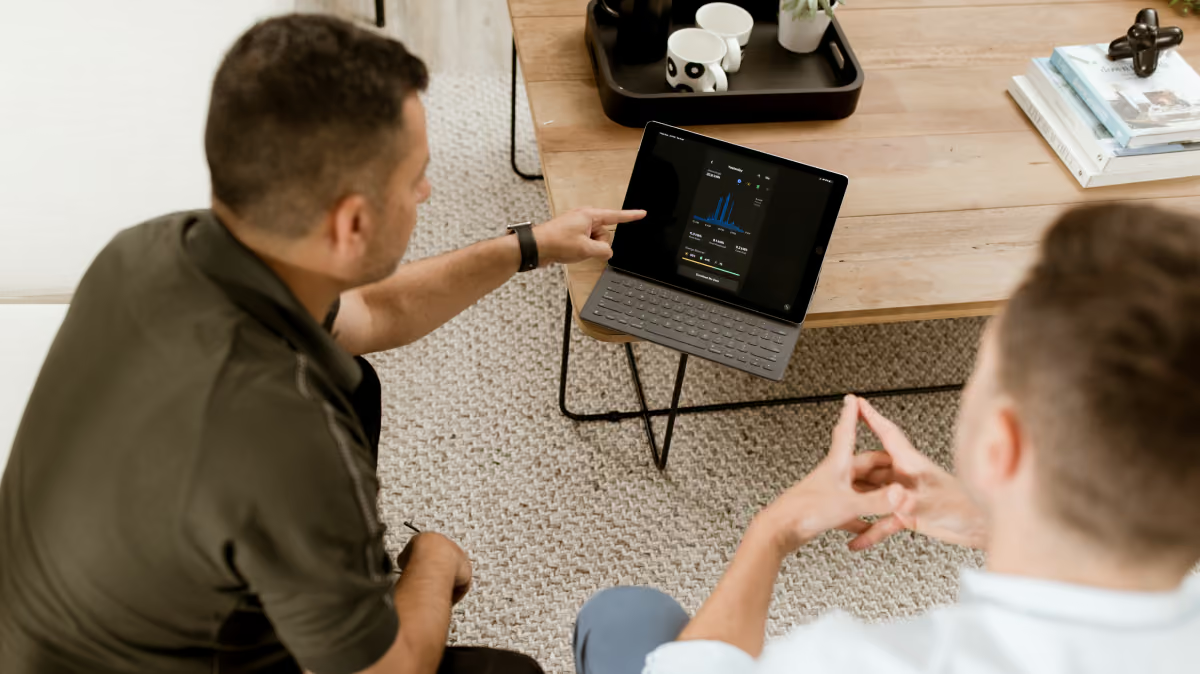
Most homeowners choose solar to avoid surprises, not create them. They want steady savings and a system that blends into daily life.
Avoiding solar installation mistakes doesn’t require expert knowledge, just the right conversations early on. That’s how the Harrisons Solar team approaches planning: understanding real usage, roof conditions, and future needs before anything is locked in. When solar is planned properly, it does exactly what people expect. It sits quietly in the background and does its job. Harrisons Solar understands the value that solar power can bring to New Zealanders. Using solar power can make Kiwis' lives easier when they're installed right, positioned right, and harnessed for daily use.
FAQs
What are the most common solar installation mistakes?
Common mistakes include choosing the wrong system size, overlooking shading or roof orientation, focusing only on price, and not planning for batteries or EV charging. A small amount of research can add value to any solar setup.
Can solar installation mistakes be fixed after installation?
Some issues can be fixed later, but they often cost more once the panels and wiring are in place. Careful planning helps avoid expensive changes later.
How do I know if my roof is suitable for solar panels?
Roof suitability depends on orientation, pitch, shading, and condition. An on-site assessment gives a clearer picture than assumptions or photos.
Is the cheapest solar system a good option?
Low-priced systems can work, but they may involve trade-offs in quality, warranty support, or long-term performance. Remember, if you choose quality, your setup can be more durable and designed to last.
Do solar systems need ongoing maintenance?
They’re low maintenance, but occasional cleaning and performance checks help to keep them running efficiently.
Should I plan for batteries or EV charging when installing solar?
Yes. Even if added later, planning for them early makes upgrades simpler and more cost-effective.
Book your free quote
Book a free, no-obligation on-site assessment at a time that suits you. We'll size up your roof, talk you through your options without the jargon, and give you a proposal on the spot.

How we've helped our customers
Hear from customers on how solar has made a real dent in their power bill.


Get your Beginners
Guide to Solar
Download our guide to learn:
How solar saves you money
How a solar system works
If your roof is right for solar
How to choose an installer
And more