

.svg)
.avif)
What to Ask a Solar Installer Before You Choose a System
Solar quotes can be hard to compare when one installer talks in package names, another talks in panel brands, and nobody quite explains why the system suits your home. If you want clear answers before you sign anything, this checklist will help.
Use these questions in any on-site assessment or quote comparison, and pay close attention to how each installer answers. Clarity matters more than hype when you are choosing solar for your home in New Zealand.
Your solar installer checklist
1. What size system are you recommending for my home, and why?
This is the first question to ask because a good recommendation starts with your home, not a standard package. The answer should cover your recent power use, your roof layout, your daytime usage, and any future plans such as an EV, spa pool, or battery.
If the answer sounds generic, keep digging. A system should be sized around how you live, not just what happens to be on sale.
2. What assumptions are you using about our power use?
Even a tidy-looking quote can be built on shaky assumptions. Ask whether they have used recent power bills, how many people live in the home, when you use the most power, and whether your usage is likely to change.
A good answer should be specific. If they cannot explain the assumptions, it is hard to trust the recommendation that follows.
3. What will this system include, exactly?
Quotes for home solar panels can look similar at first glance while covering very different things. Ask for a clear list of the panels, inverter, optional battery, mounting, monitoring, install work, warranties, and retailer paperwork.
The inverter is the box that turns DC from the panels into the AC power your home runs on. If that is not clearly named in the quote, ask for it in writing.
4. Why have you chosen these panels and inverter?
Brand names alone are not much help if nobody explains the fit. The answer should link the hardware to your roof, shading, budget, support, and how you want the system to perform over time.
For example, a good explanation might cover whether your roof has multiple angles, whether monitoring matters to you, or whether battery readiness is worth paying for now.
5. What trade-offs should I know about this option?
Every solar installation for home use comes with trade-offs. One setup may cost less up front, another may give you better monitoring, and another may suit a tricky roof better.
A good installer should be comfortable talking through those trade-offs in plain English. If they only describe upsides, you are not getting the full picture.
6. How much of my power use is this likely to cover, and what does that depend on?
This question helps you separate realistic guidance from broad promises. A useful answer should give a range, not a guarantee, and explain what affects that range, such as season, weather, your daytime usage, and your retailer's rates.
If kWh comes up, that is the unit your power bill counts. It is different from kW, which is the size of the system and how much power it can make at full tilt.
7. What warranties apply, and who do I call if something goes wrong?
Warranty language can get muddy fast, so ask them to split it out clearly. You want to know the workmanship warranty, the panel warranty, the inverter warranty, and the battery warranty if one is included.
You also want to know who actually helps if there is a problem later on. A long product warranty is only part of the story if support is hard to get.
8. Who will install the system, and how is the work managed?
This gets to accountability. Ask who carries out the solar panel installation, how the install is checked, and who coordinates the job if follow-up is needed.
Good answers should make the process feel clear, not vague. That matters because solar panel installation NZ wide is a long-term purchase, not a one-day transaction you never think about again.
9. What happens before, during, and after installation?
Process clarity tells you a lot about service quality. Ask what happens from the first assessment through design, install day, setup, monitoring, and ongoing support.
You are looking for a provider who can explain the whole journey without fluff. For solar installation NZ homeowners can feel confident about, the process should be easy to follow before work even starts.
10. What support do you offer after installation?
Solar panels can be on your roof for 25 years or more, so after-sales support matters. Ask what happens if you have a monitoring issue, a question about performance, or need help understanding what the system is doing.
A good answer should explain who you contact, what kind of help is available, and whether support continues after install day.
11. Can you explain this quote in plain English?
This sounds simple, but it is one of the best filters you have. If an installer cannot walk you through the quote line by line now, support may be harder later.
You should be able to understand what you are paying for, what is optional, and what assumptions sit behind the recommendation.
12. Is there anything about my home that could change the recommendation?
This question shows whether they are thinking about your home in context. Roof angle, shading, access, region, switchboard condition, and future household changes can all affect the right setup.
A thoughtful answer is a good sign. It shows they are assessing your home properly rather than dropping the same system into every conversation.
Common pitfalls to avoid
Comparing price before scope
A cheaper quote is not always a like-for-like quote. Compare what is included before you compare the number at the bottom.
Choosing on brand alone
Panels matter, but so does system design, install quality, and support. Ask why that hardware suits your home instead of assuming a known brand tells the whole story.
Treating all warranties the same
Product warranties and workmanship warranties cover different things. Ask for each one to be explained separately, along with who handles any claim.
Skipping after-sales support
Support is easy to forget when you are focused on the quote. Ask who will still be there to help once the install is done.
Ignoring usage patterns
Solar electricity for home use works best when the system is matched to how your household uses power. Ask how your daytime usage and future plans have been factored in.
If you only do 3 things
Ask why the system size suits your home. Ask who supports you after install. Ask for the trade-offs to be explained in plain English.
Those 3 questions will tell you a lot about the quality of the advice, the quality of the service, and whether the recommendation is actually tailored to you.
Bring your questions to us
At Harrisons Solar, we welcome detailed questions. Your local Harrisons solar business owner will come round for a free, no-obligation, on-site assessment, look at your roof and power use, and talk through your options in plain English.
We have been in Kiwi homes for over 60 years through Harrisons Group, and we back our installs with a 10-year workmanship guarantee in writing. That is the kind of clarity you should expect before choosing a system.
FAQs
Should I ask every installer the same questions?
Yes. Using the same checklist makes quotes much easier to compare. You will spot differences in sizing, inclusions, warranties, and support much faster when each provider is answering the same set of questions.
What is the most important thing to compare in a solar quote?
Start with system sizing and scope. If 2 quotes include different hardware, support, or install work, the price alone will not tell you which one is better value for your home.
Why does after-sales support matter so much with solar?
Solar is a long-term purchase, and questions can come up well after install day. Monitoring, warranty support, and troubleshooting are much easier when you know exactly who to call and what help is available.
Book your free quote
Book a free, no-obligation on-site assessment at a time that suits you. We'll size up your roof, talk you through your options without the jargon, and give you a proposal on the spot.

How we've helped our customers
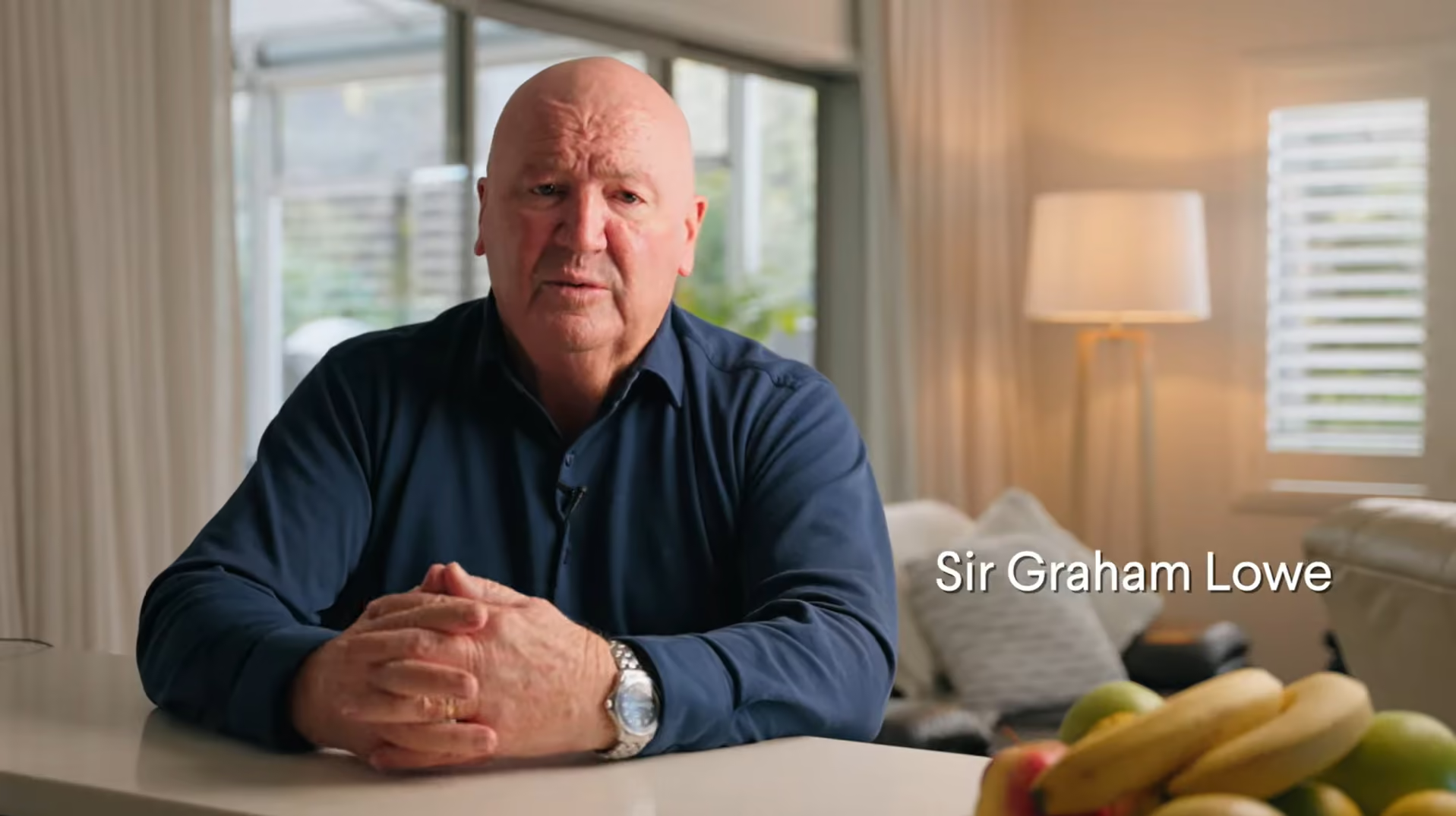
Hear from customers on how solar has made a real dent in their power bill.


Get your Beginners
Guide to Solar
Download our guide to learn:
How solar saves you money
How a solar system works
If your roof is right for solar
How to choose an installer
And more